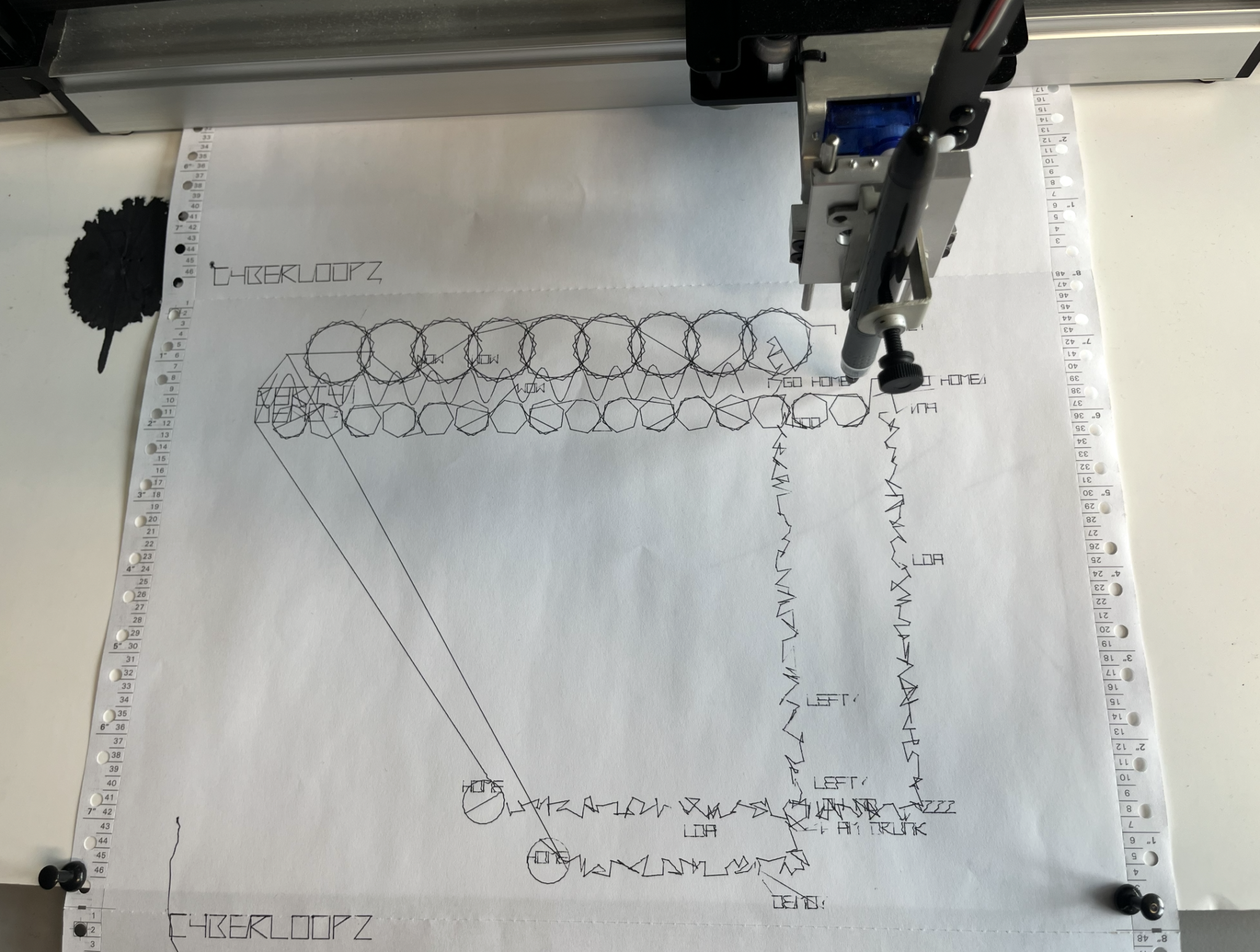
Lets go back to the 60ies/70ies, when digital Computing was done in big digital Mainframes.
This is a demo that tries to bring back the time, when Screen were not there or a lot too expensive and the only Displays were TypeWriters alias TeleTypeTerminals. This is a demo with a plotter. But also in the 8Bit-Time you could buy Plotters and make demos with them. If you are more interested in Plottergames – so look at PotShot or our Plottergames with AxiDraw here. So let’s beam back to the 70ies.
ResearchQuestion: How could a PlotterDemo look like in the 60ies?
Developing a demo for the demoscene isn’t easy. This is because the demoscene does have—even if it isn’t always articulated—a clear idea of what the demoscene is. Read more here: “ What is a demo (in the demoscene)? Extensionally, of course, all demos—historically, a product of a purely digital community? And intensionally? Or can a plotter demo be a demo? The community provides the answer.“ (German sorry)
Real-time digital wow factor
For a detailed discussion of what the transcendental significance of the demoscene might be, see here: Demoscene: 1980s home computers as the inspiration/foundation of the demoscene [brief discussion] (German sorry). The answer to that would be: the real-time digital „wow“ effect. At its core, this involves a computer with a screen that can be manipulated in real time. That would be a definition from the 1980s, when the demoscene first emerged. However, this would not take into account the early days of the digital computer scene, with its mainframes, teletype writers, terminals, or even plotters.
Demonstration featuring the first digital displays
So this is supposed to be about a demo that uses a plotter. This screen was the graphical output device alongside second-generation teletypes (before that, punch cards were used for input and indicator lights for output). These plotters existed before screens, were responsible for graphics, and were simply cheaper than coated tubes.
Technical limitations
Of course, as with all (visual) displays, there are technical limitations. The limitation here is that it is an additive system. You can only draw on top of it. This means that, ultimately, nothing can be “erased.” It would also be possible to repurpose the content—for example, by expanding a figure or, as with tattoos, drawing something new over it. Anything else is difficult. In this sense, there is no “clear screen” feature, unless you manually change the sheet. CLS is slow and very analog.
You can see some ideas here
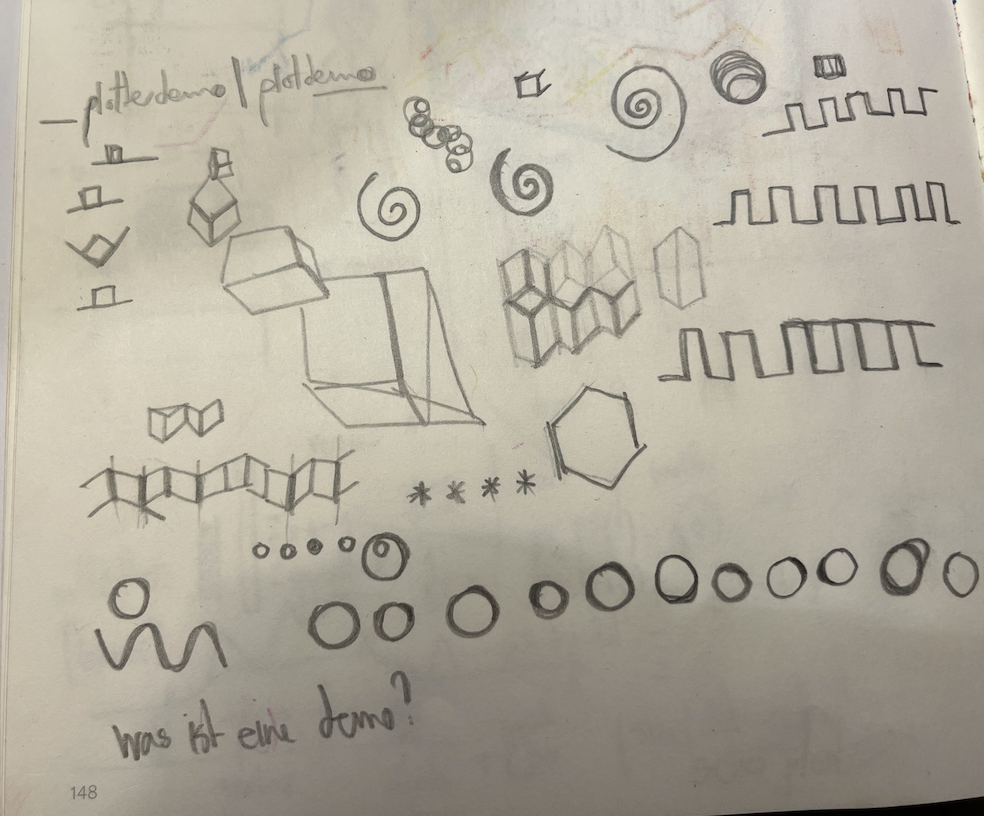
Challenges/Demo Content: Maximizing use of the display or tile-based design
In that sense, a real-time challenge could involve filling this page as densely as possible, constantly changing the subject, or creating something entirely new by writing over what’s already there. How often that succeeds—that, in itself, could be a challenge. However, it would never come close to the challenges outlined above. This challenge would first need to be developed. The discussion above likely already points the way.
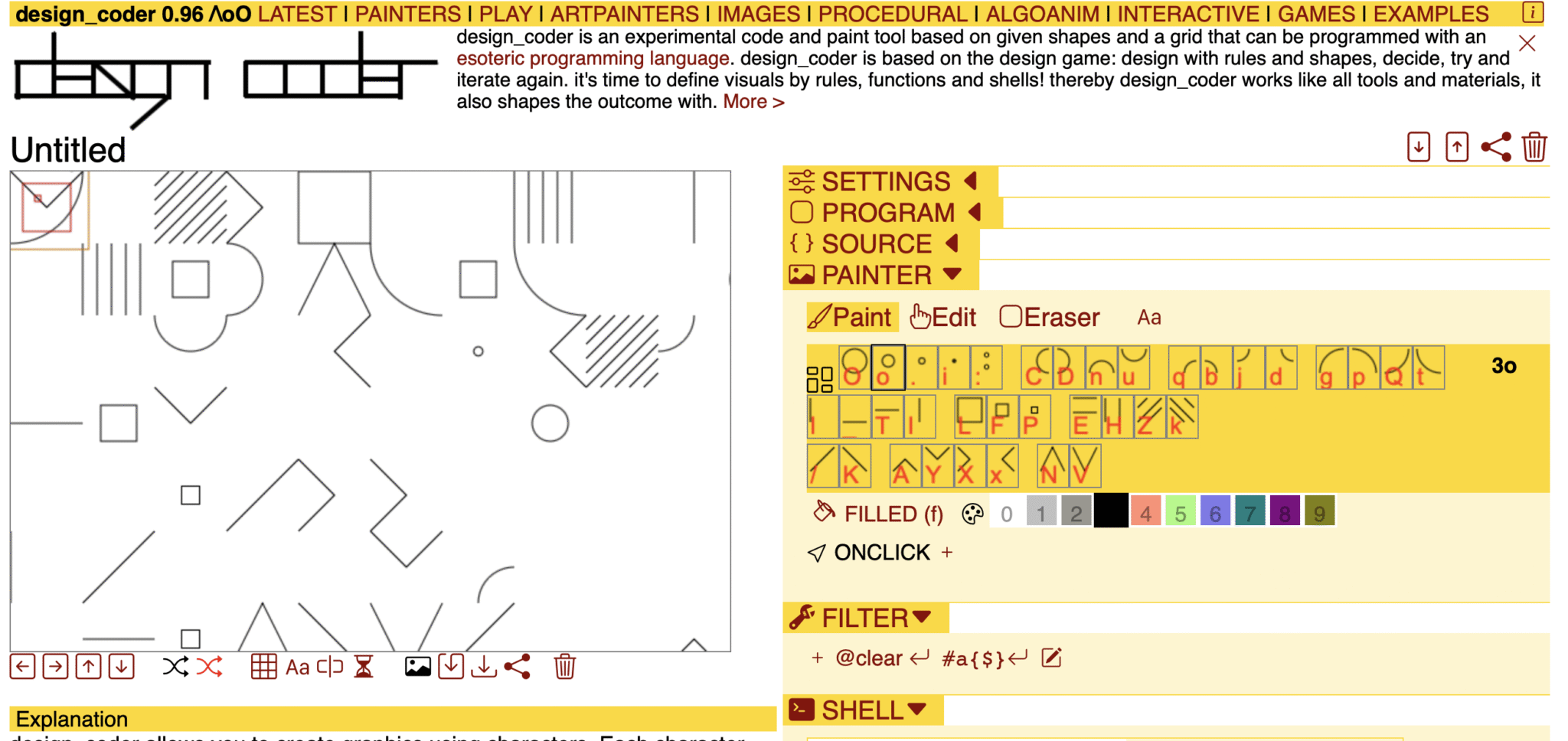
Of course, it would also be possible to continue the work using DesignCoder (https://designcoder.and-or.ch) and explicitly work with complex, multi-layered tiles.
But in both cases, there is also what is likely a cultural issue: generative graphics
The Deep Hole: Generative Graphics – Algorithmic Art
Generative graphics are also quite dangerous in the art world: the demoscene is breaking away from generative art. Generative graphics rely heavily on chance—and from an artistic perspective, that’s what can be interesting when it comes to computers and algorithms. The demo. There are also very few demosceners* (as far as I know) who have actually made the connection between the demoscene and generative art or who even wanted to. The only example I know of is Julian Gachadoat Nic/Nick of The Carebears TCB (Atari ST).
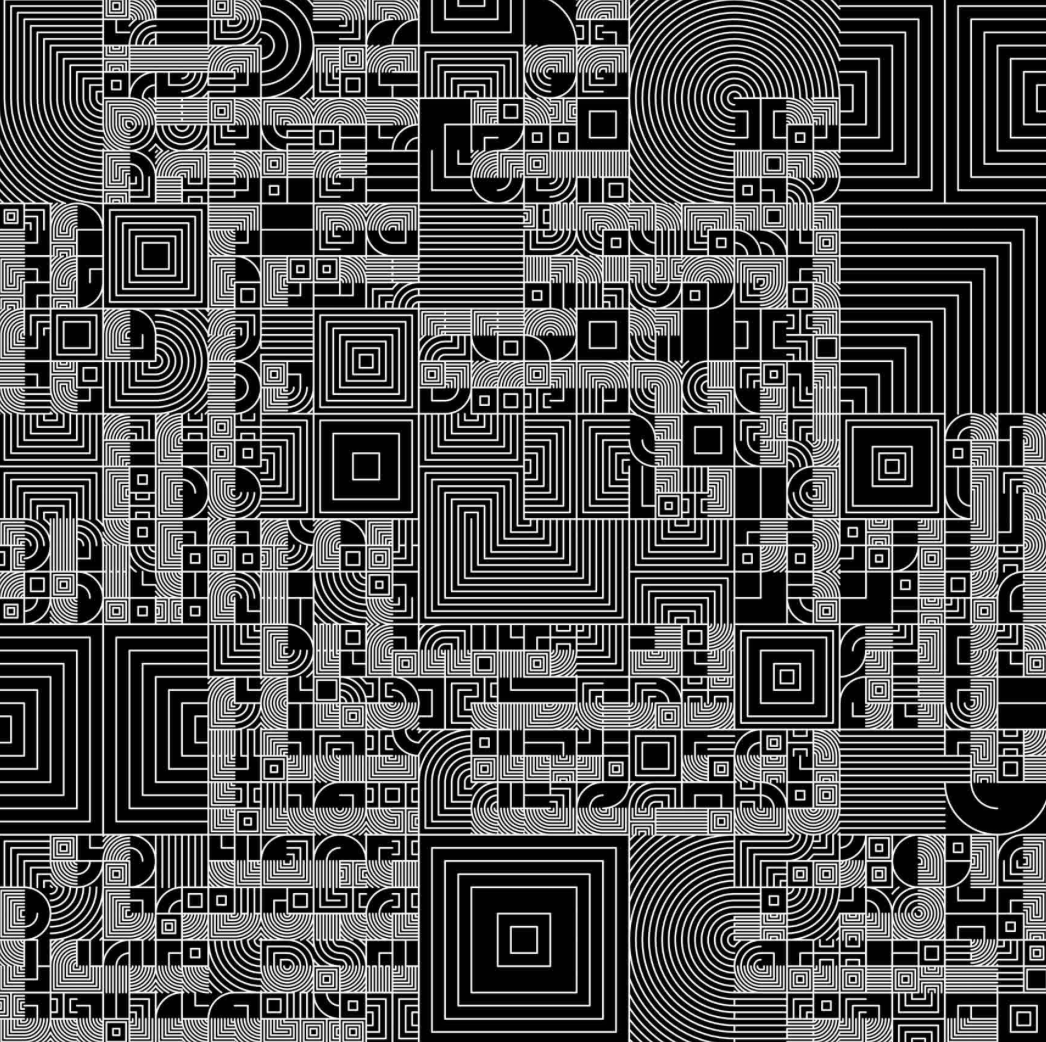
You can find out more about his works, some of which are animated, here: https://www.v3ga.net. One thing is clear: the entire graphic consists solely of algorithms.
Narrative Demoscene featured in „Digital Real-Time Wow Effect“
The other branch of the demoscene is the narrative demoscene, which actually focuses on story-driven demos—or, in other words, features a more traditional narrative (rather than relying solely on visual effects). Here, it would be possible to create a demo or at least incorporate such elements into one.
That’s when the idea came up to move away from the usual demo setup and take the abstract nature of a plotter demo—or demos in general—and carry that visual language forward. The idea had already been developed for a plotter game. In other words, what if the whole thing were just a trail? After all, plotters always produce a trail (just like vector screens .-).
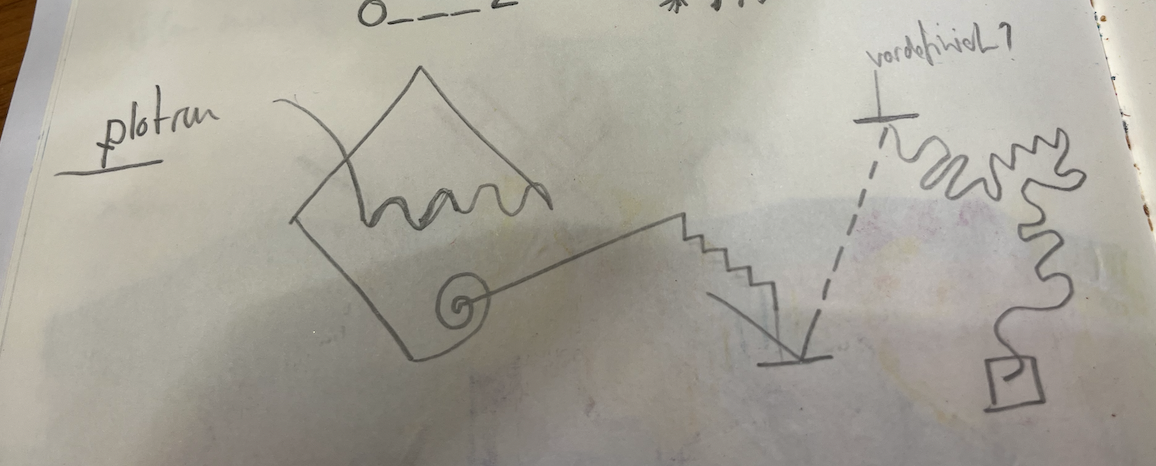
Warja Lavater also created a comic strip on this topic in the 1970s and 1980s. So the idea also dates back to the era of plotter displays.
Complexity
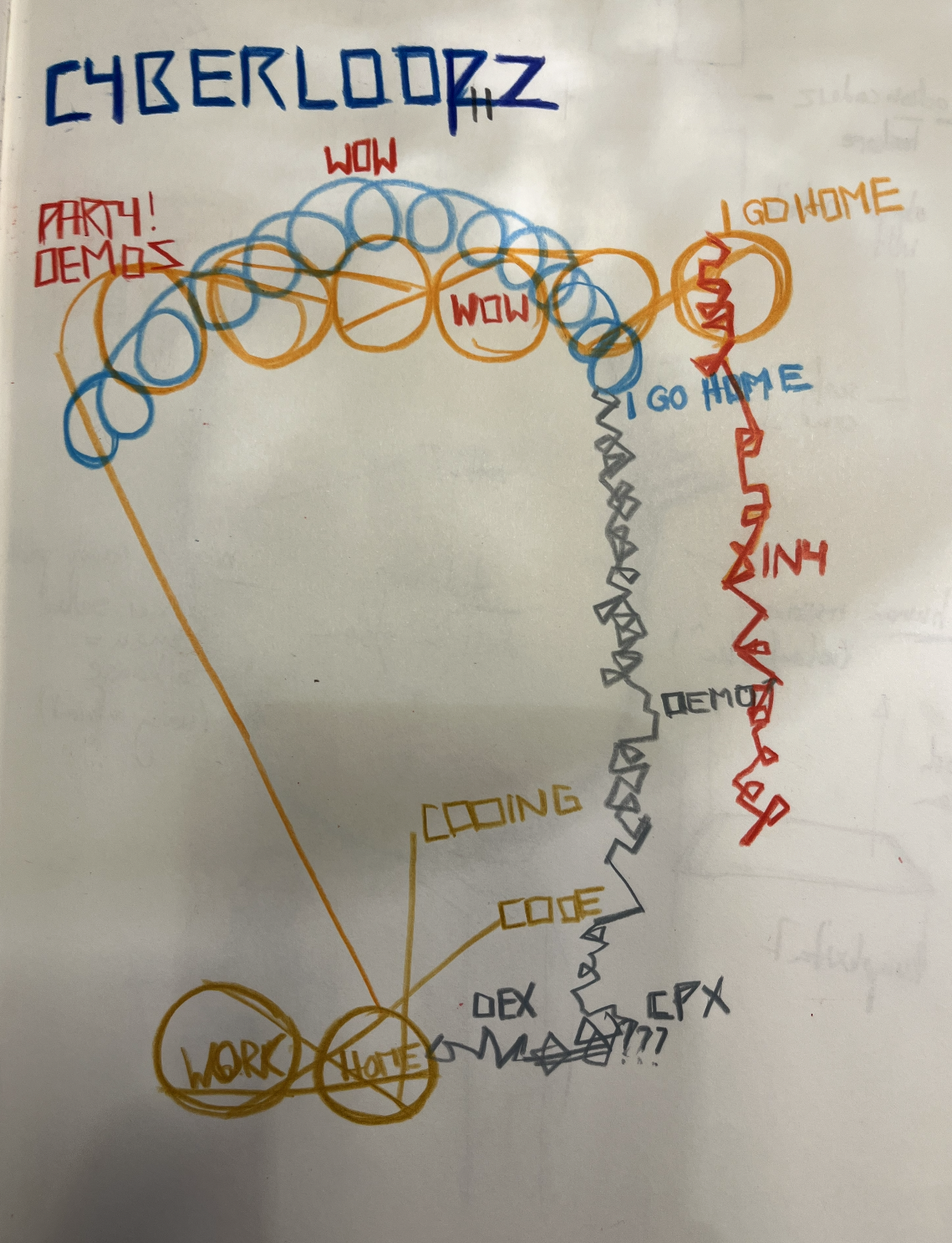
In what followed, the ideas of the demoscene essentially merged into one: at first, the classic demoscene with the power of the algorithm—that is, “a small algorithm produces graphics”—and then the journey home, meaning the breaking down of the fourth wall. The line becomes the player on his way home, a drunk, random player. He wanders around, and as he does, ideas about the party and technology come to mind. Here, chance plays a role, drawing on procedural art. Then the graphic transitions into a cybernetic loop. It’s about work or death. This is inspired by The Designers Republic’s graphic “”, though here a cybernetic loop is actually being used. Then the next cycle begins and the graphic is overwritten. So here, the page is filled—in a rather crude manner—ad infinitum. The demo user* has a choice here: When do they stop?
Ideation and Prototypes
A lot of experimentation. In the end, the result was a mix of different styles. Complexity then emerged through various iterations.
The final sketches in the process. Here, the focus is now more on demoscene cybernetics.
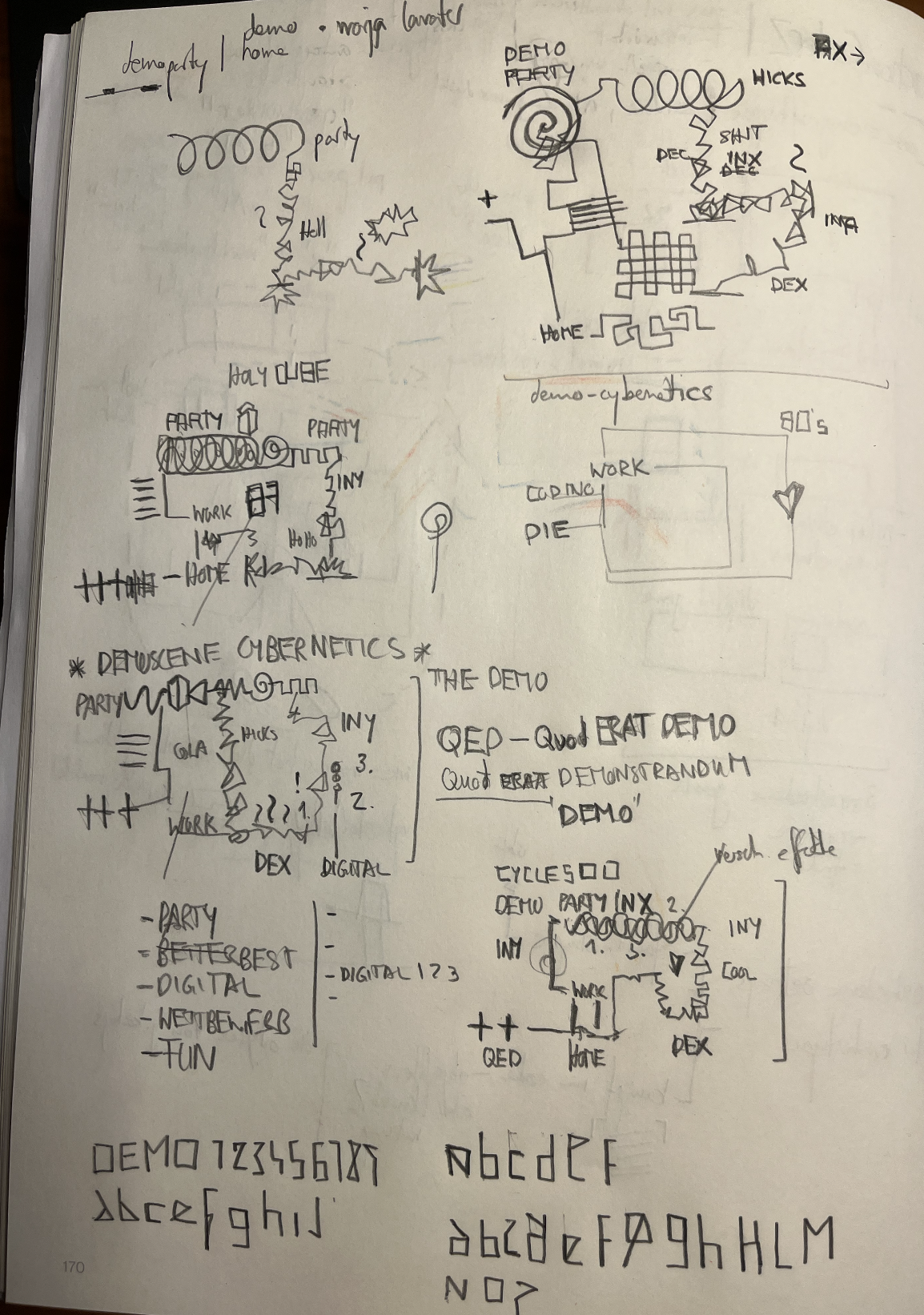
„Afterparty“ – Mixed Demo
The demoscene is thus depicted as a cybernetic cycle consisting of three or four distinct sections.
Part 1: The Demoscene to the Core—Little Code, Big Impact
The first part of the demo describes the demo itself. Here, we draw something using as little code as possible while achieving a big impact. In short: simple. You’ve seen this in all those nice Pico8 screenshots. Of course, those are animated, but the appeal here lies in trying to see the “wow” effect as you draw. How does the graphic develop? Unlike in a screenshot, there’s only one point of focus. You see the pencil drawing, you see the painting-algo in action.
Various effects. One is selected at random.

Software perspective on the scene

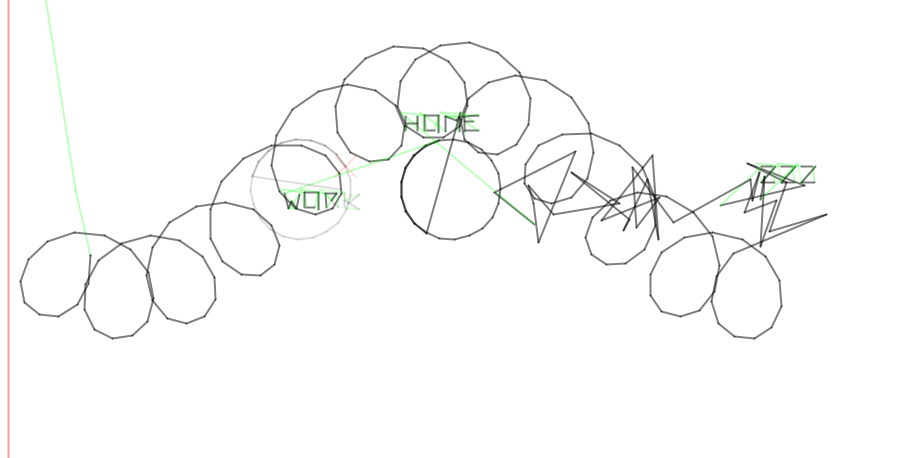
Part 2: On the way home from the party …
On the way home. Very drunk. Slurring words and looking for my way home.
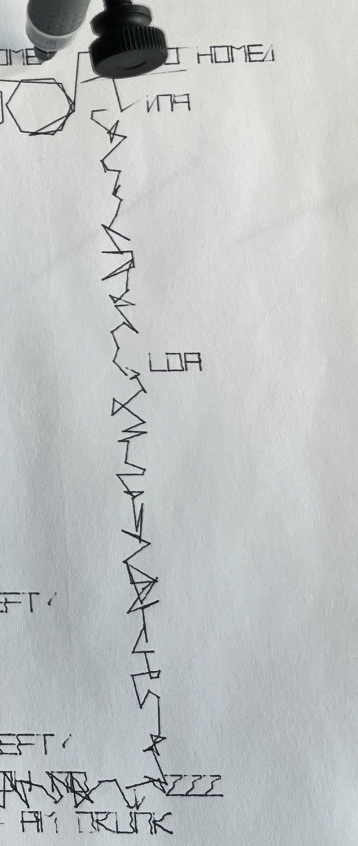
Software perspective on the scene
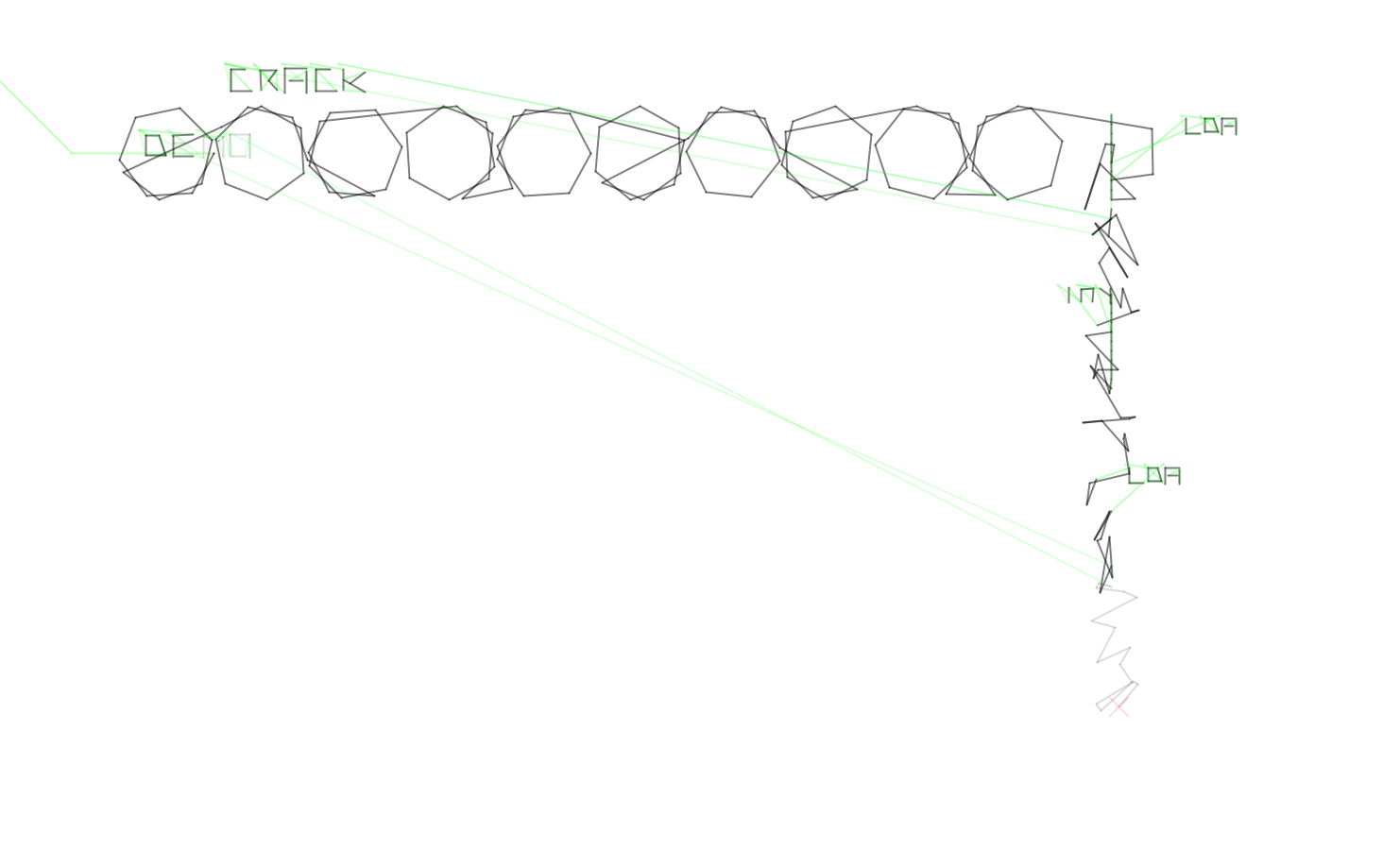
Inspired by Warja Lavater, the protagonist.
Part 3: Home-Work-Loop
Life beyond the Demoscene: You have to work and work again, and go home again.
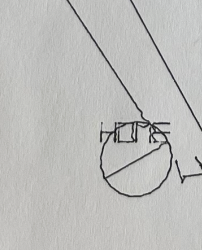
Software perspective on the scene
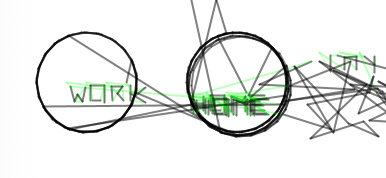
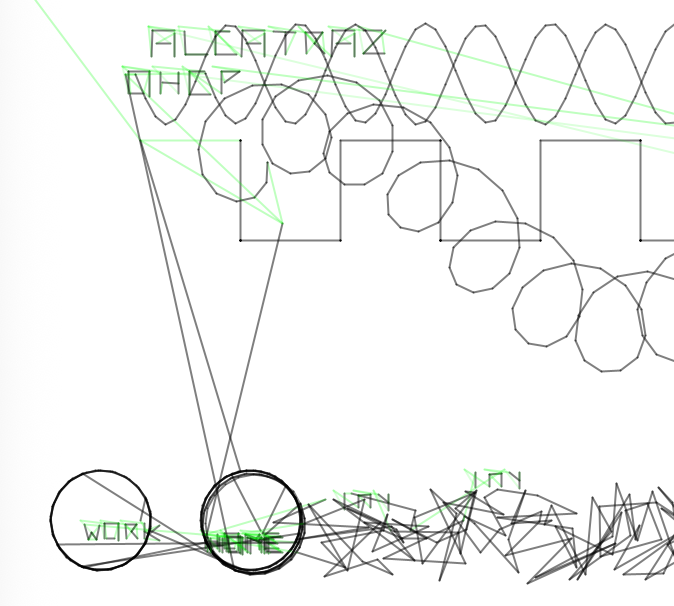
Inspired by Designers Republic. But now in realtime and as an executed cybernetic (demo-)loop.

Part 4: Next loop – Startup again …
And the „demoscener“ goes again to to the next demoparty.
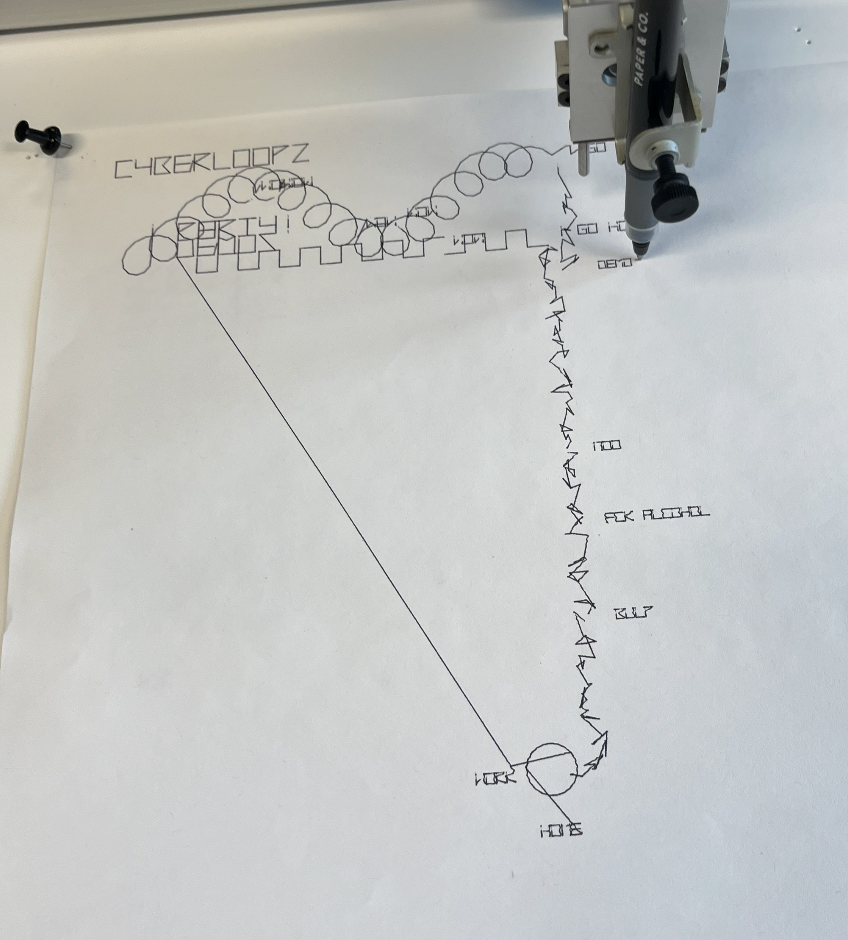
Software perspective on the scene
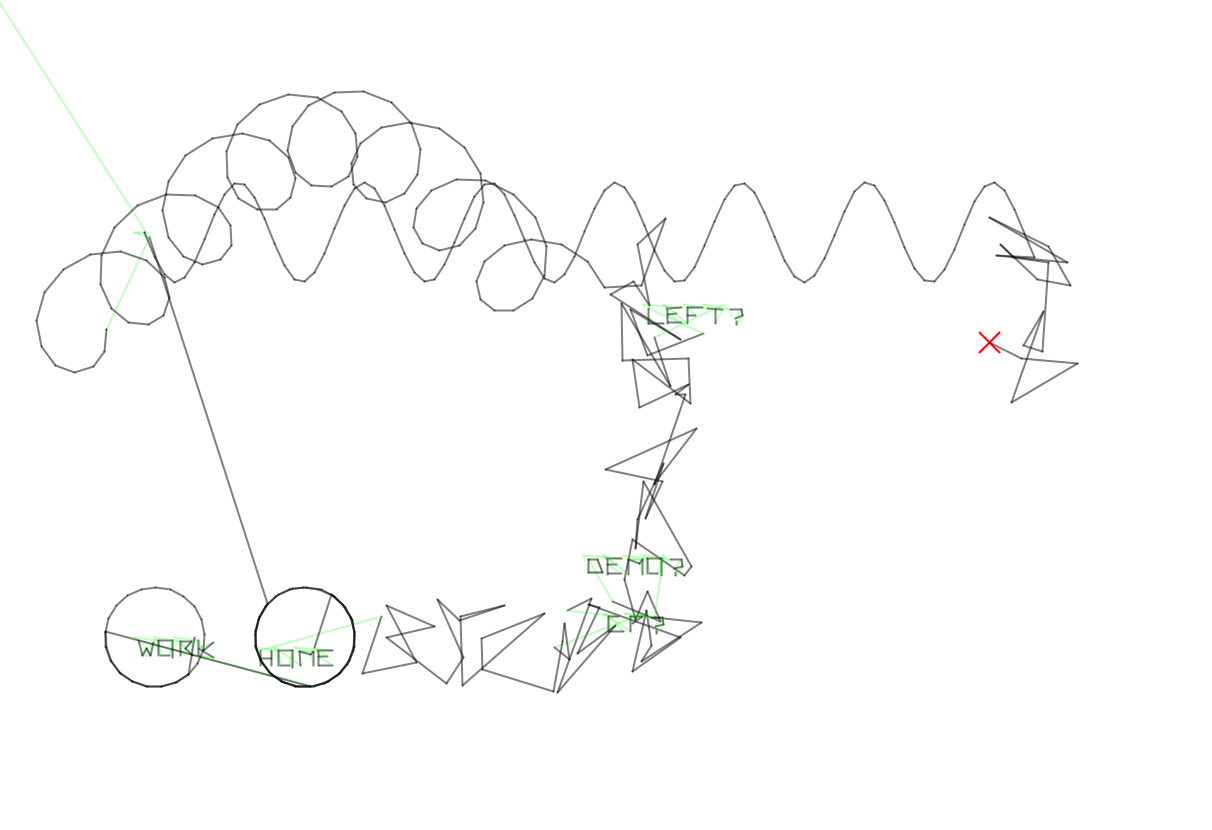
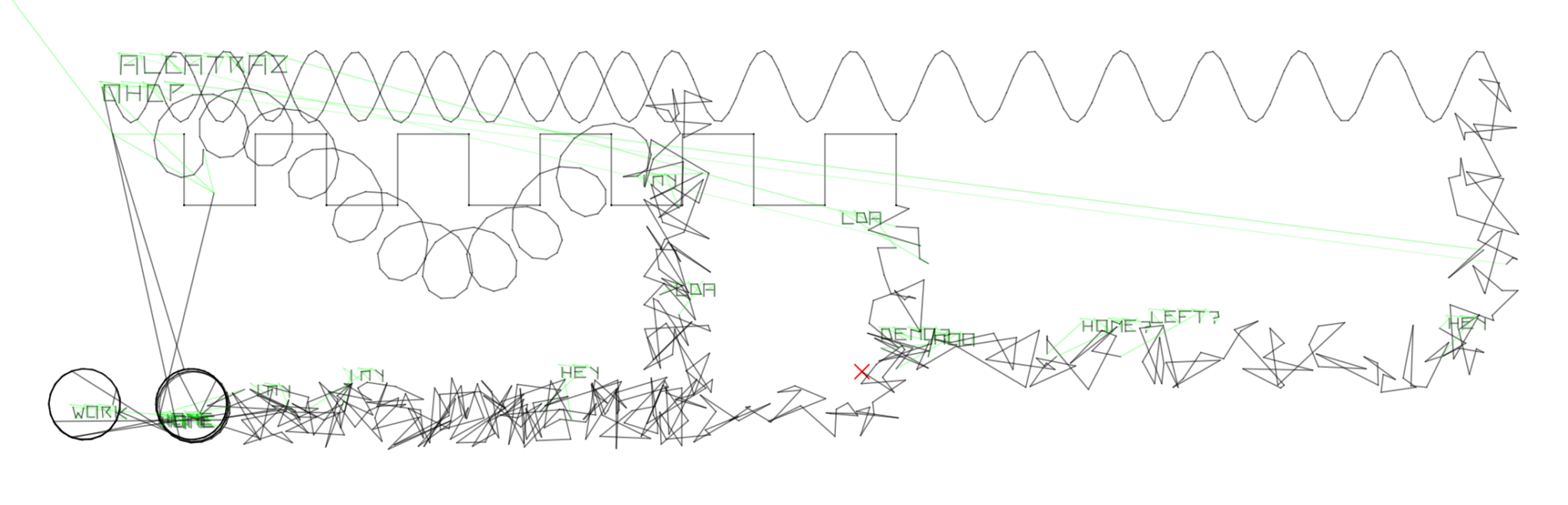
Recursion 5: Endless loop
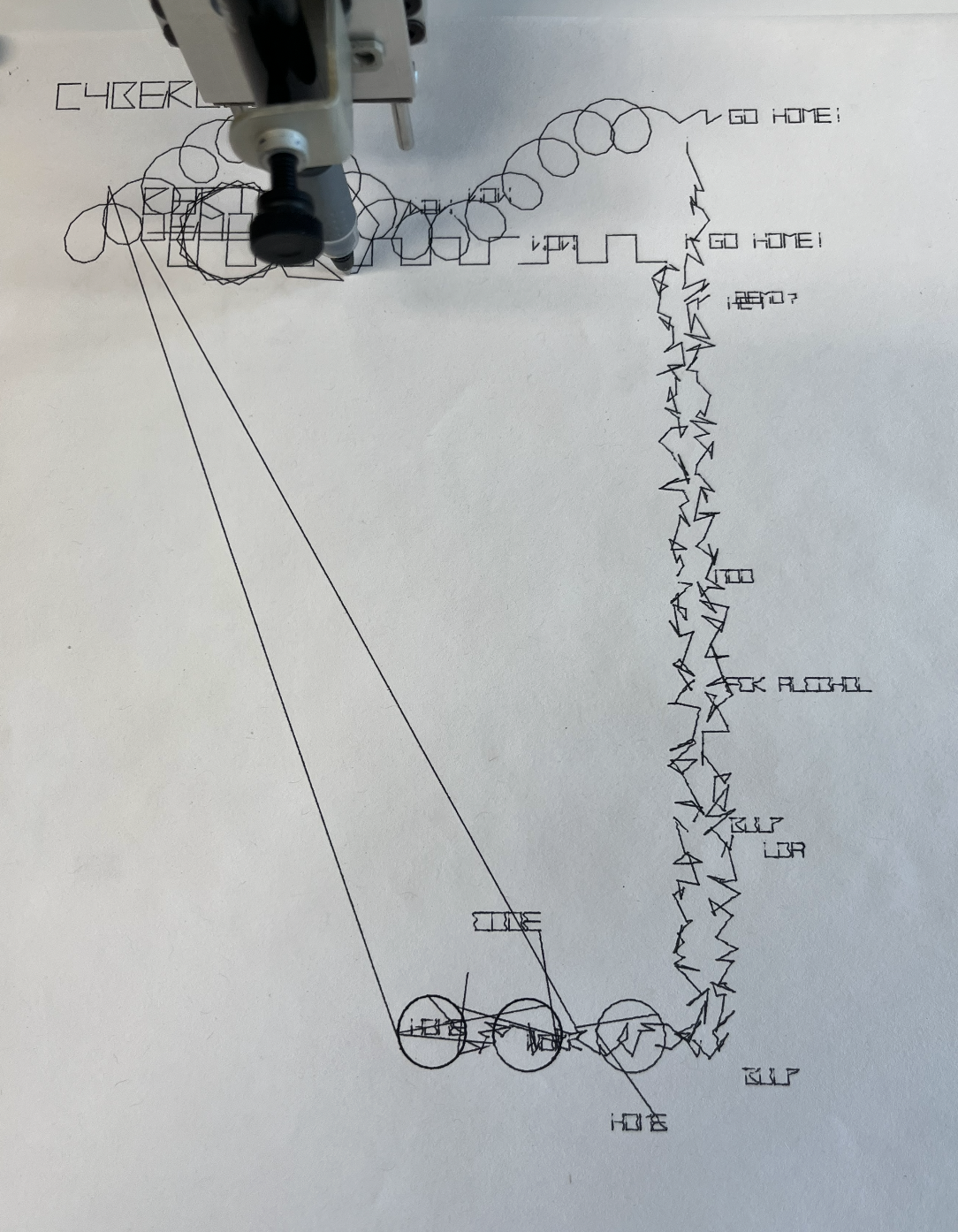
Software perspective on the scene
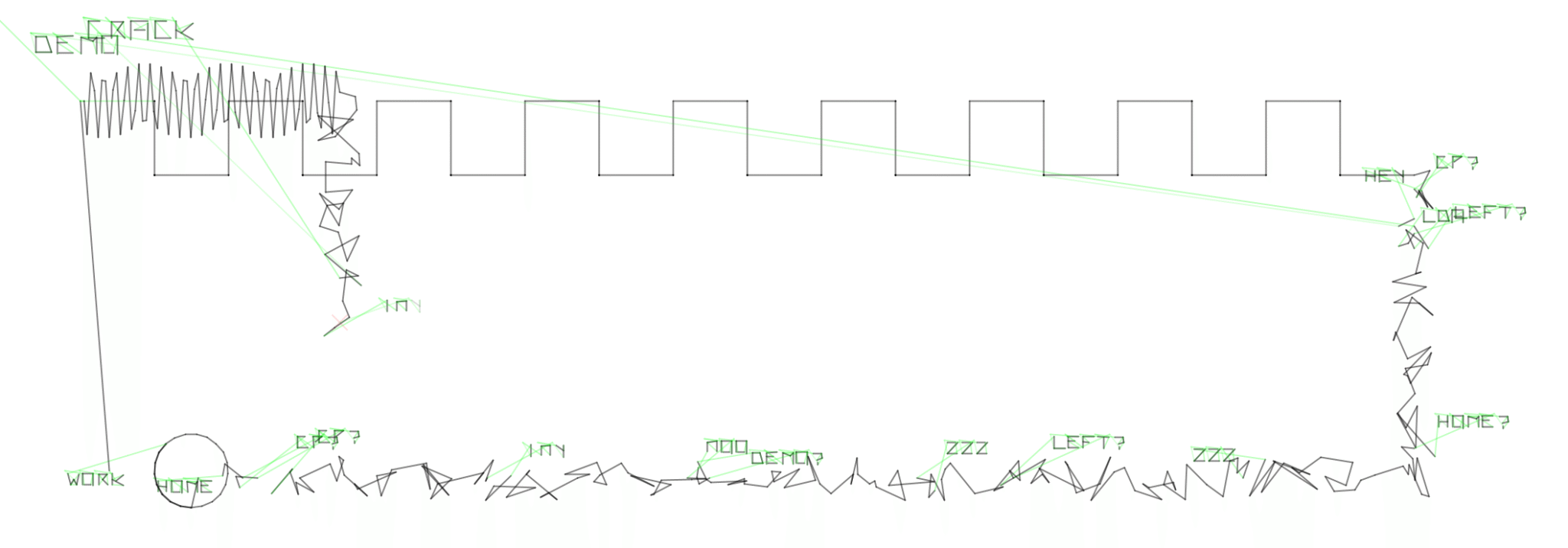
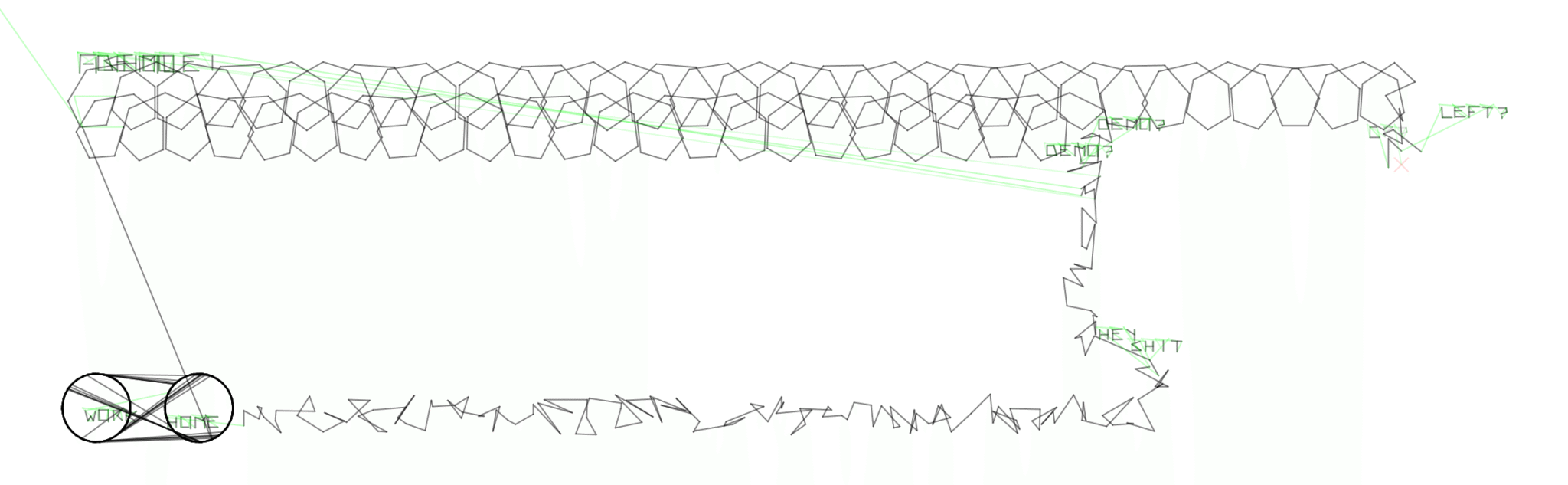
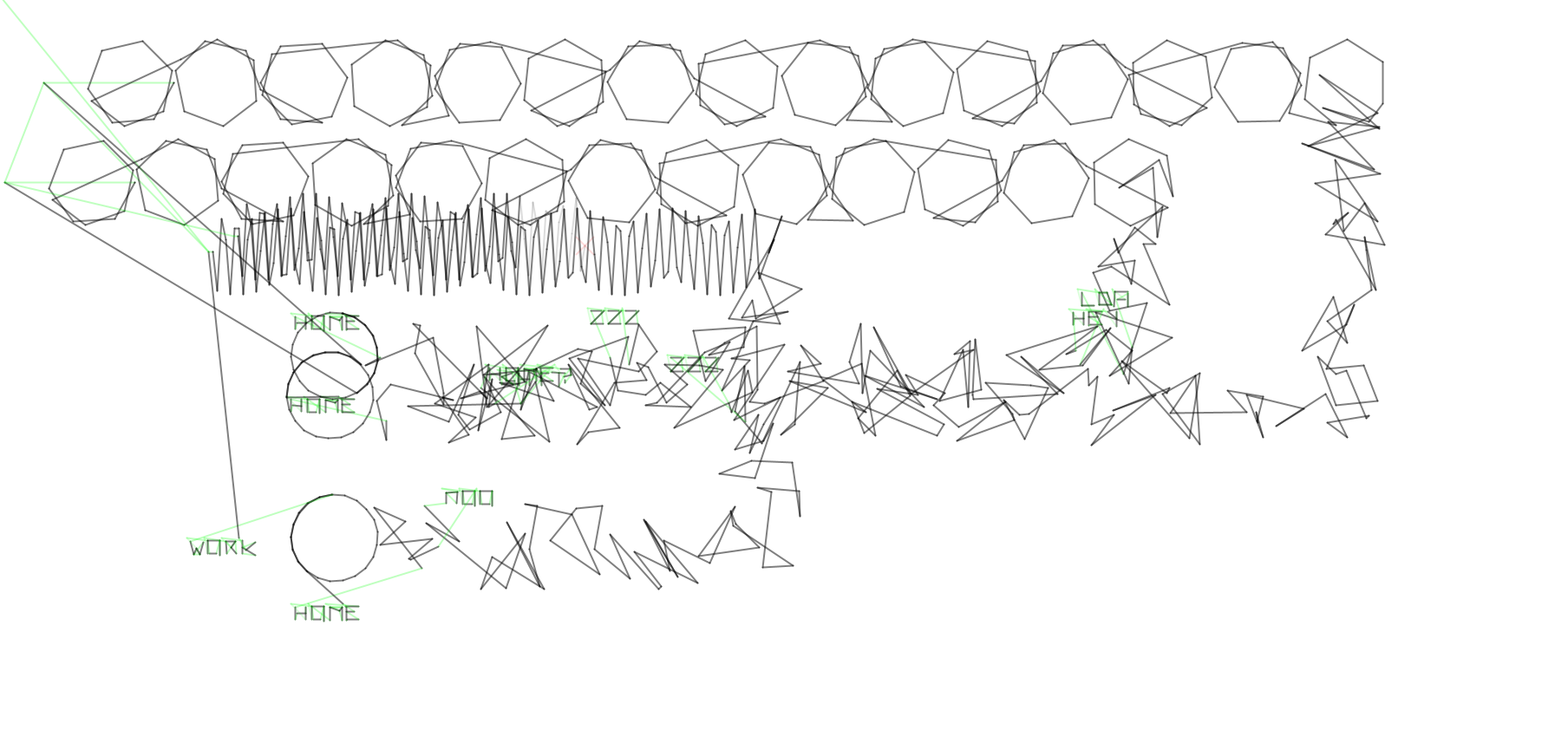
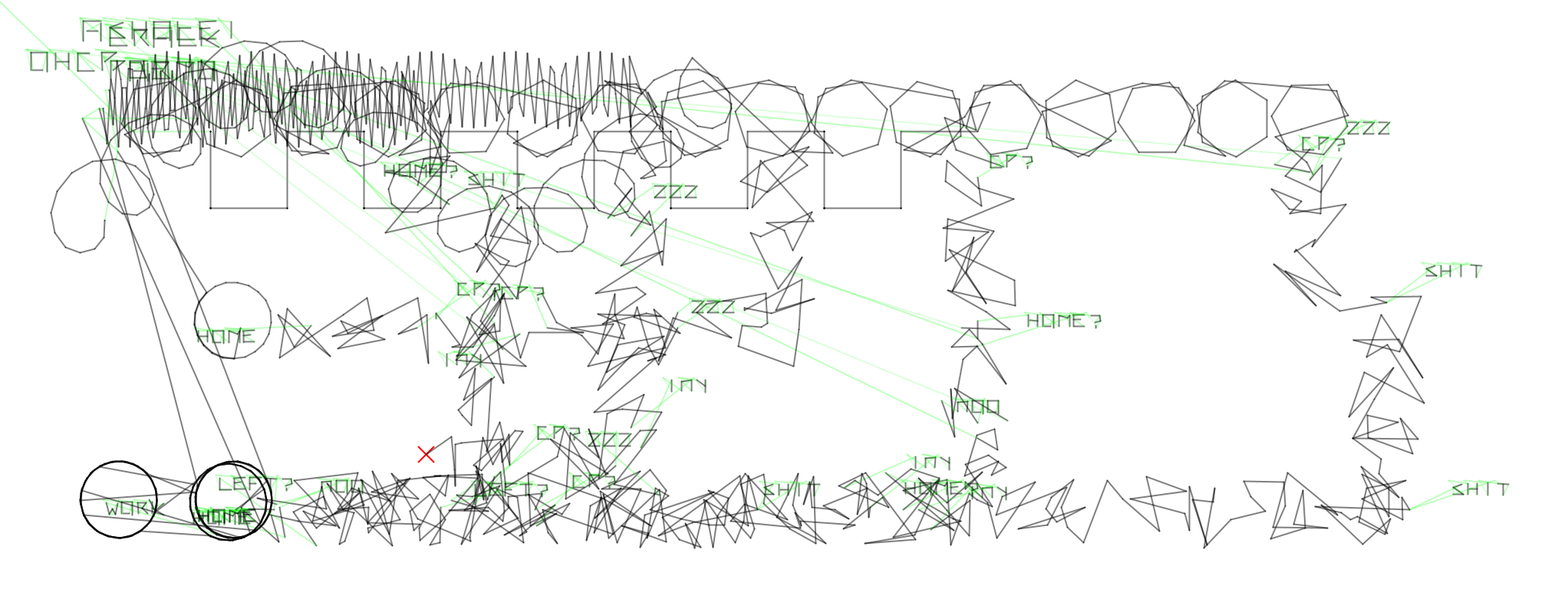
Results
Some results
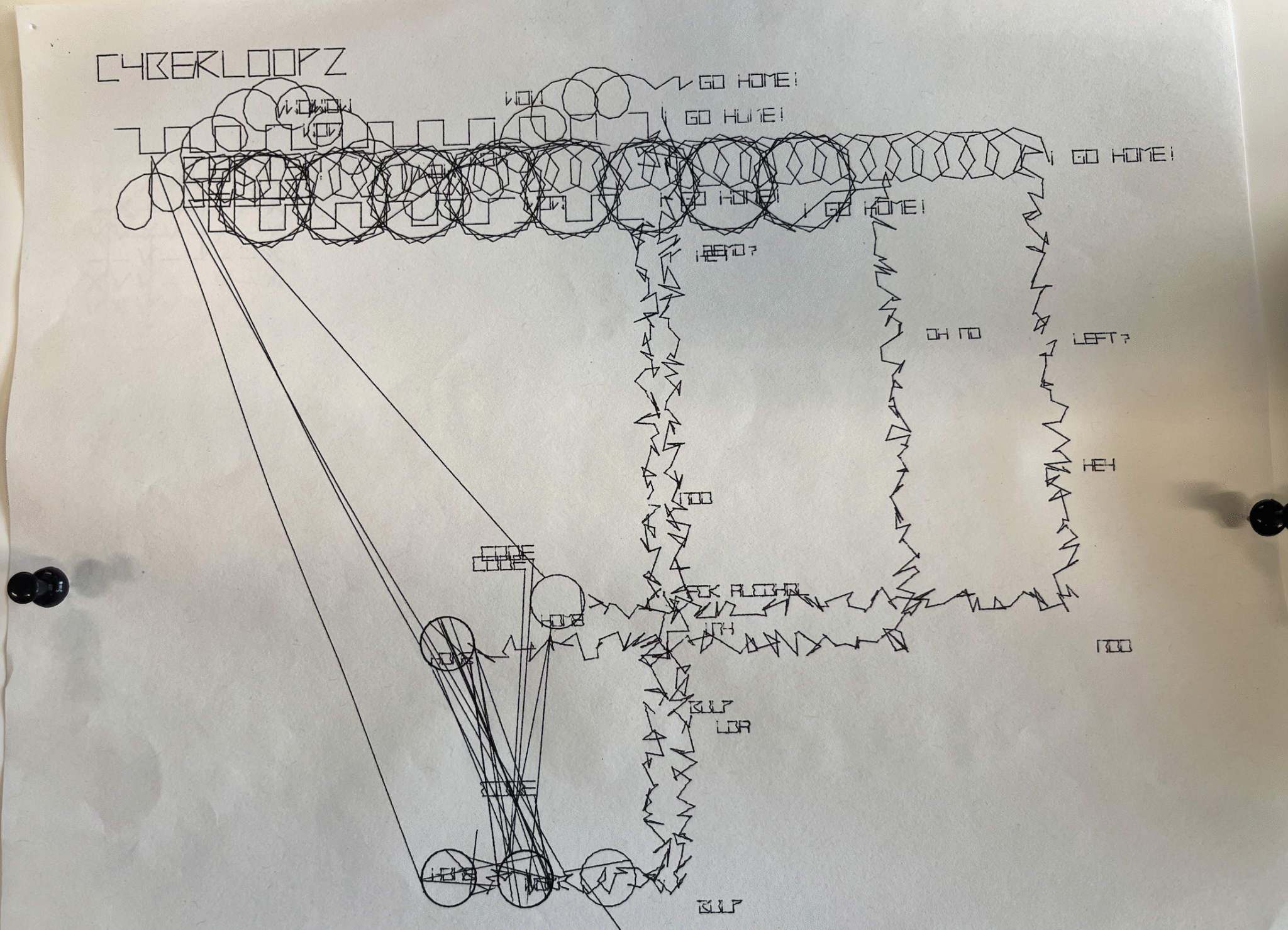
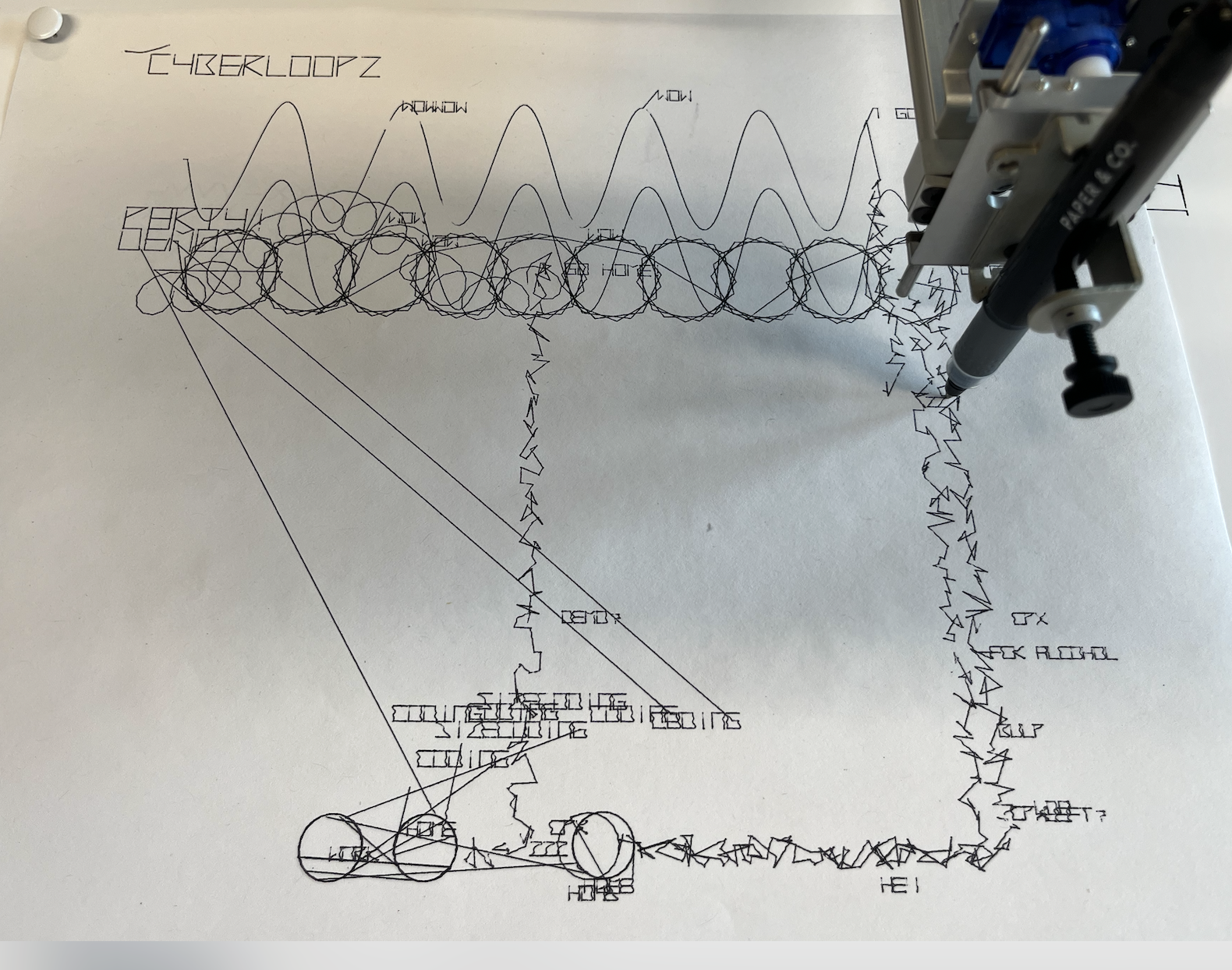
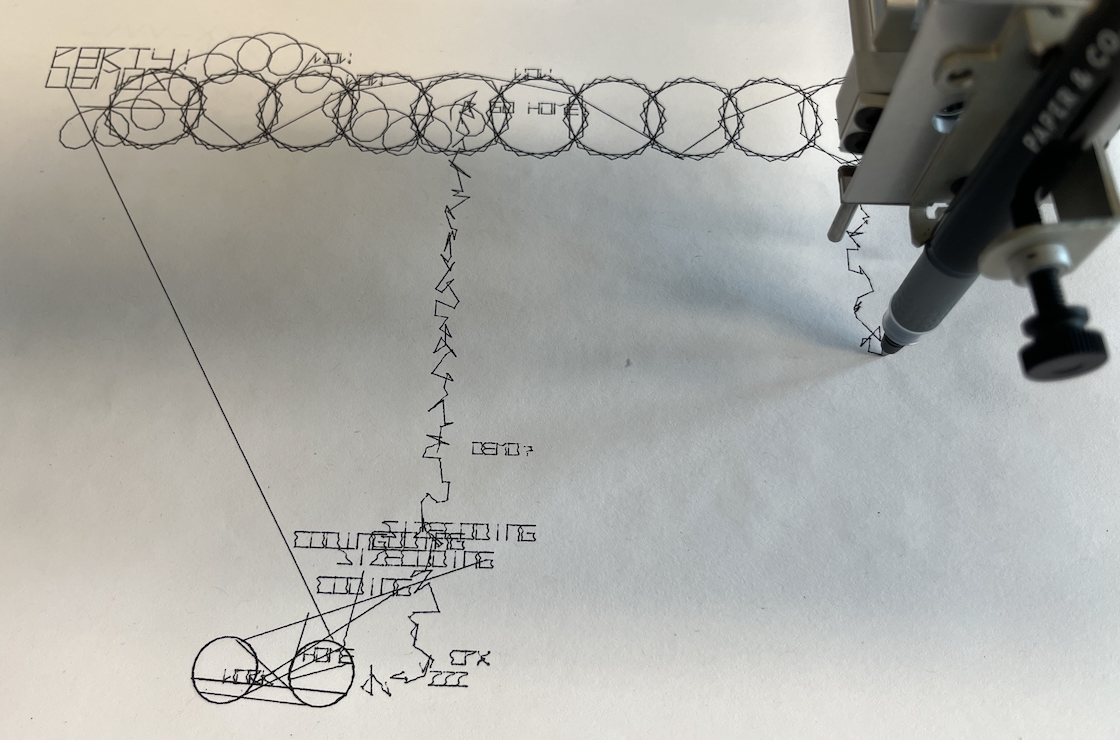
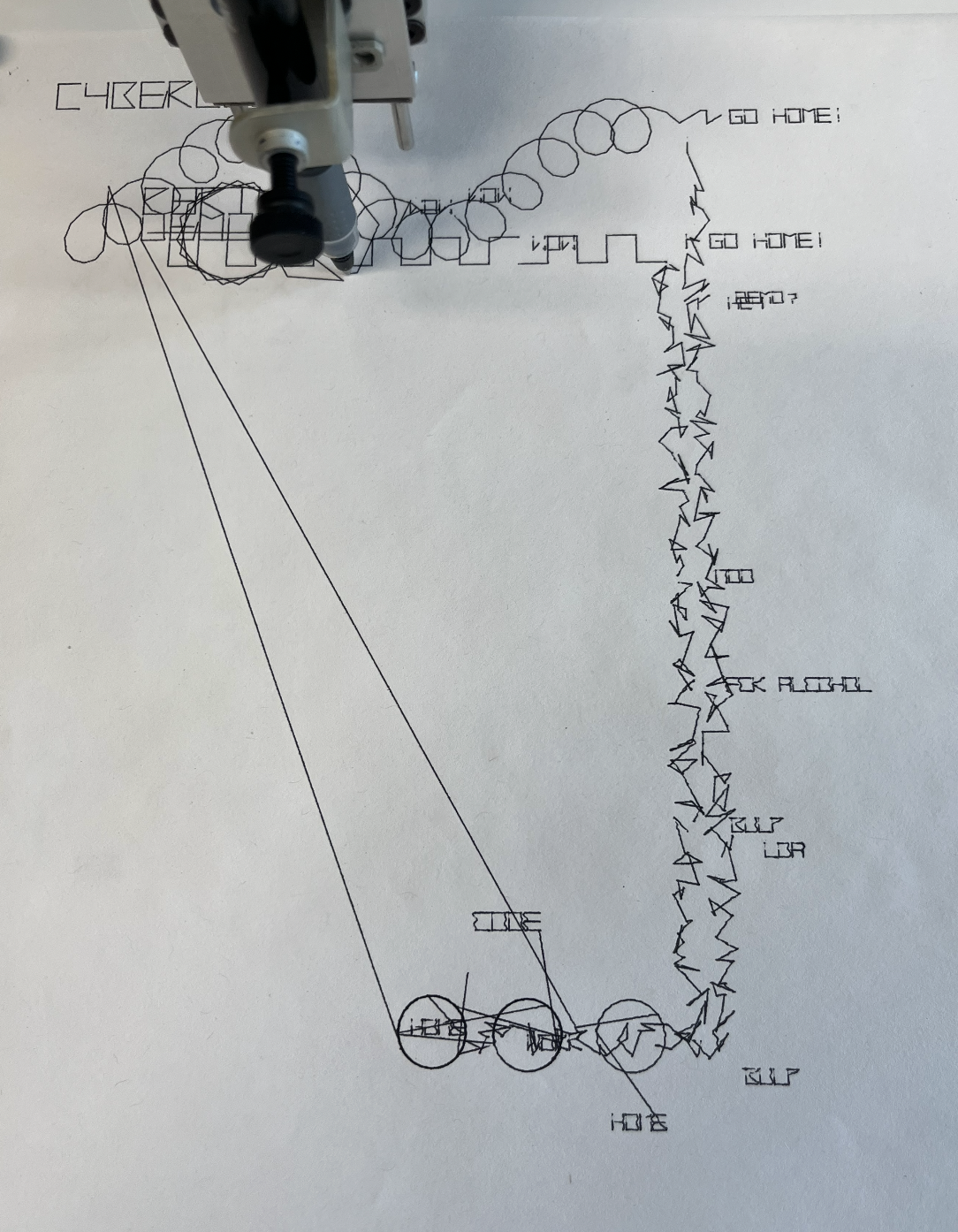


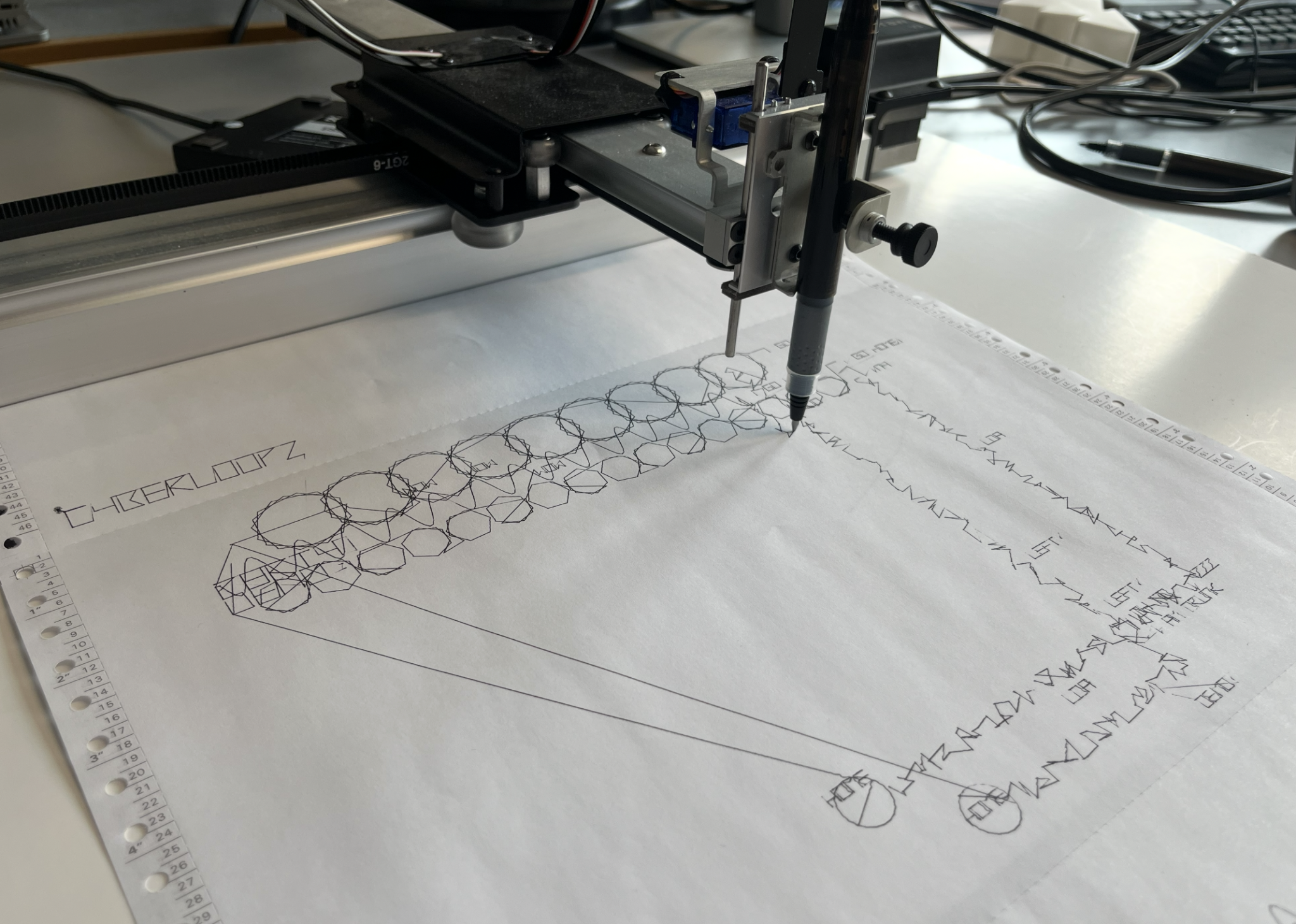
In colors the demo could look like this 🙂
Technical background
AxiDraw (https://axidraw.com)
Processing (Java)
Own Engine for the Plotter: PlotArcade …
Challenges: Each actions needs time. You have to wait till the line draw is fixed.
Similair Technologies or lets say technology with similair challgens: Platsystem display. Vektorscreens, Vectrex
Description with a version of the Software: https://research.swissdigitization.ch/?p=6600
Latest Project-File: Download Processing project here >
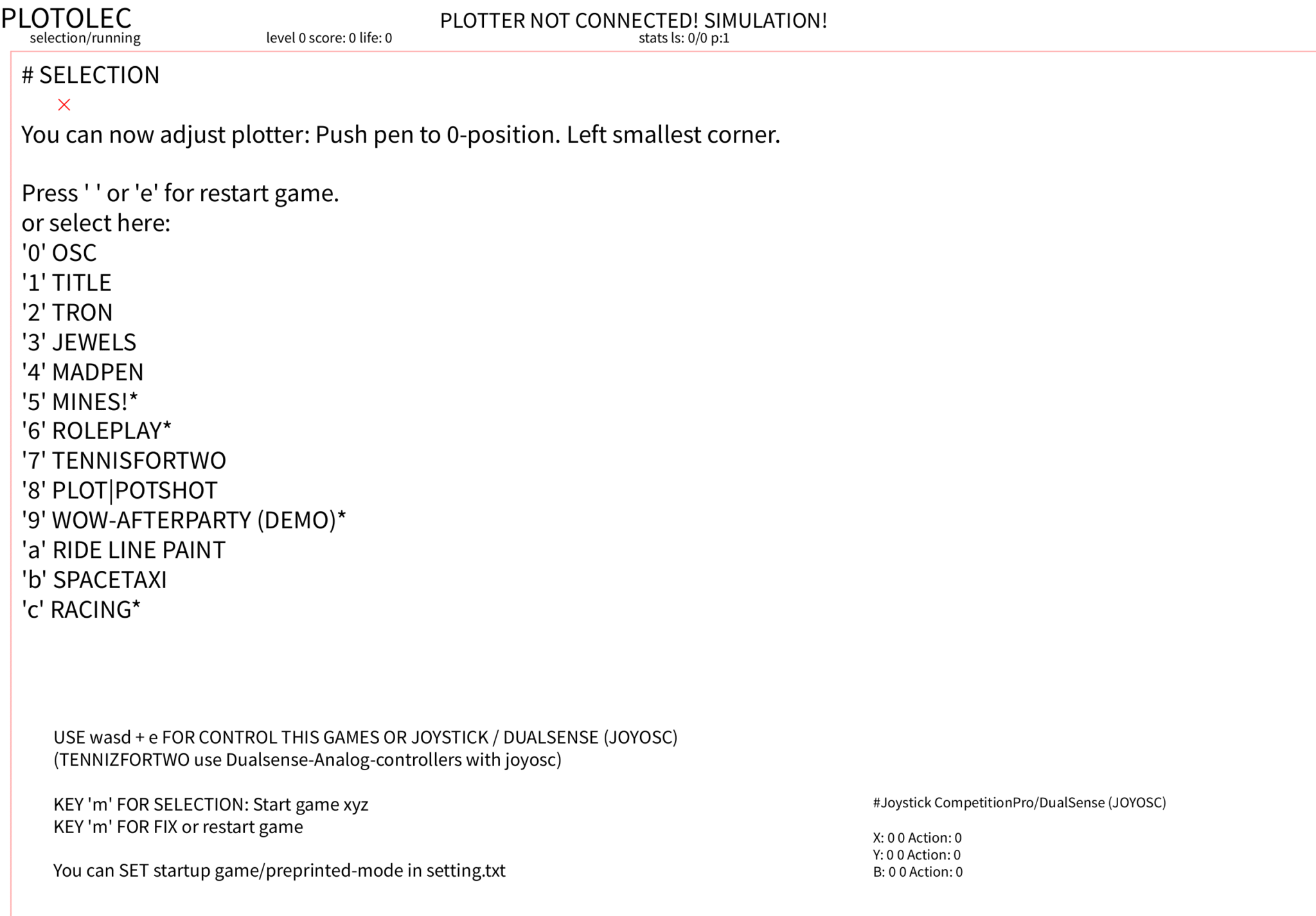
All Games are included even an OSC protocol to use in the package.
Conclusion(s)
Plotter demos thrive on (something you only find on vector displays anymore) the focus on actual drawing. Just as images have been created for centuries, rather than on 50 Hz refresh rate displays.
This is also evident in well-known plotter games like HangMan or PlotShot. These games were also developed here alongside the demo, and they offer a completely different experience of graphics. Precisely because, unlike with all demos, there are analog remnants: the printed paper.
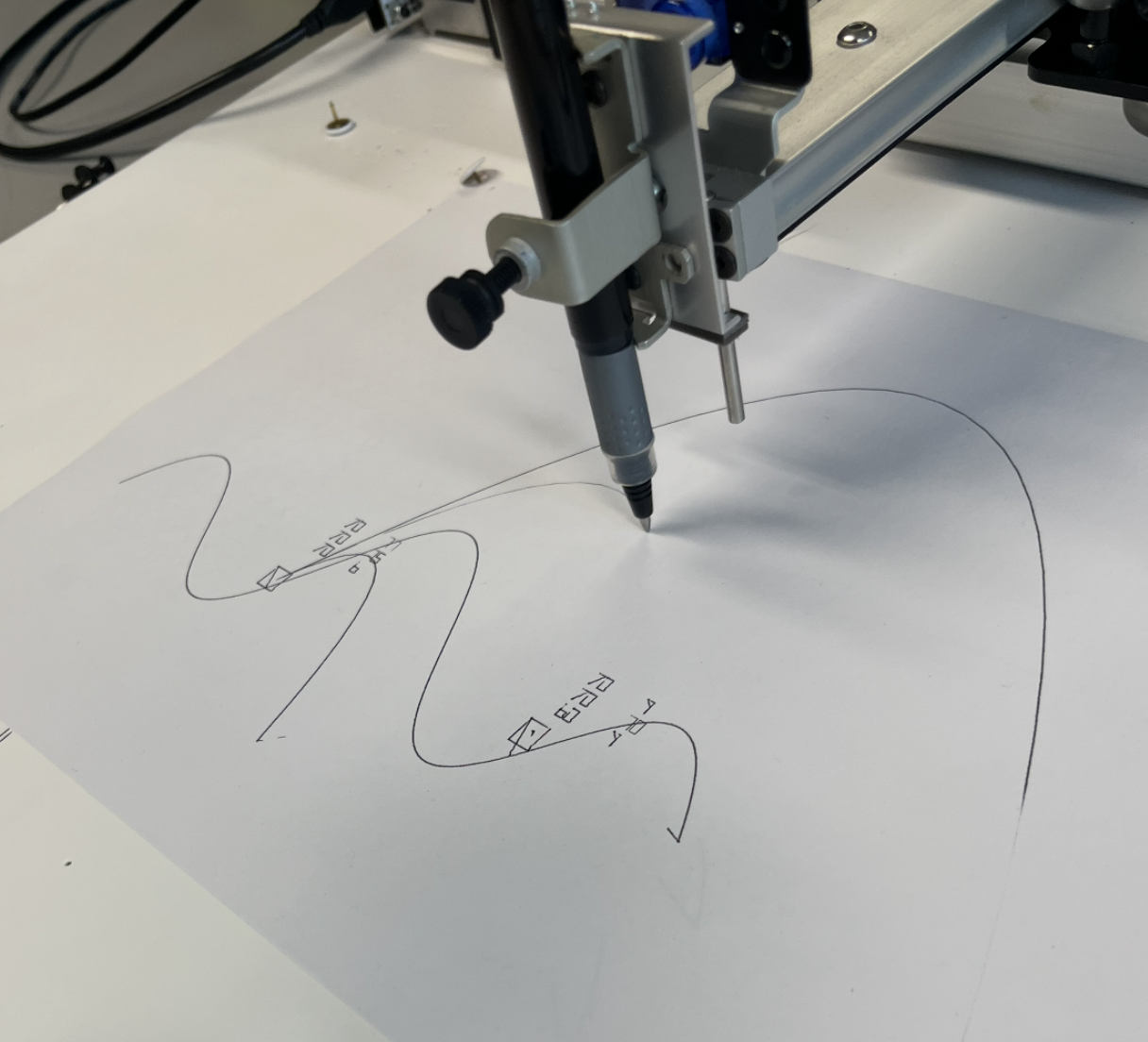
More about it here: https://research.swissdigitization.ch/?p=5835
Creating a demo using a plotter is an interesting experiment in experimental archaeology, because it raises the question: what exactly is a demo? What are the prerequisites for a demo, and where does the demoscene end or better where the demoscene started (with small algorithms)? Is the demoscene ultimately just about computers with very fast displays, or is it about more than that—computers with refresh-displays? It shouldnt be, because it first included the typewriter, then the plotter, and only later—because it was more expensive—the screen. First for me the demoscene was also about algorithm, about finding clever cloues and not only about visuals wows.
And for developers: These are additive screens—you can only add to them—which means very old or entirely new concepts have to be developed. This applies even to games like Tennis4Plot or the new Tron, and so on…
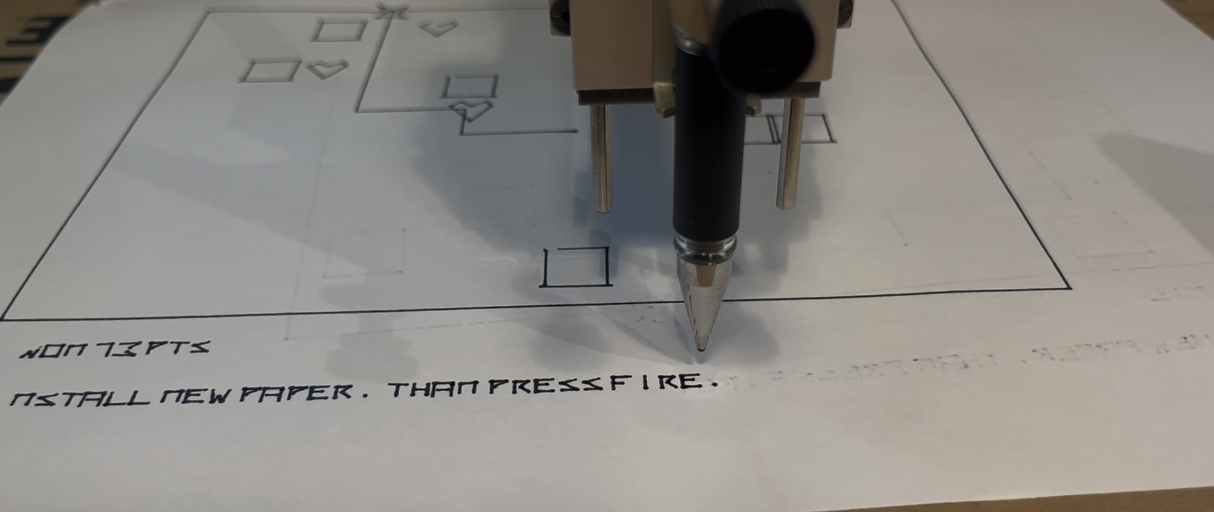
More here: https://research.swissdigitization.ch/?p=5078
And also an interesting thing is this game of course: Tennis4Two or TennisforPlot
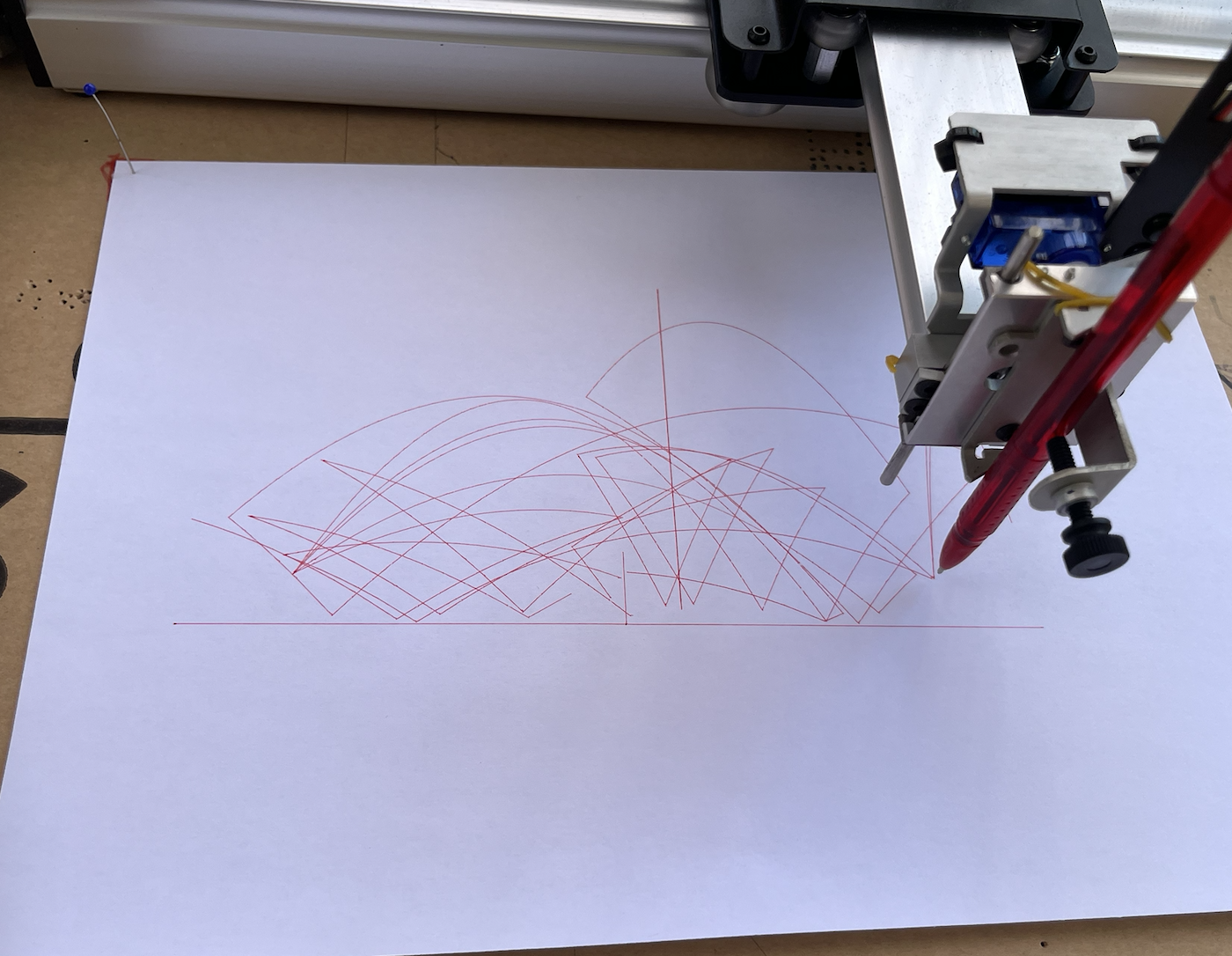
More about it here: https://research.swissdigitization.ch/?p=5334
It’s important to realize that this ultimately applies to the first input and output devices of mainframe computers as well: typewriters.
Conclusion Demoscene
Will this demo be recognized as a demo scene product? That’s hard to say. But to be honest, it really should be recognized, because the plotter was the first graphical output device in the entire computer scene!
In that sense, it will be interesting to see what happens.
Reactions
Summary of all reactions – coming as soon as there are some.